Latest TPO Roofing Trends for Long Island Businesses in 2026
Proudly serving Amity Harbor and the surrounding communities.
All-Star Roofing
Proudly serving Amity Harbor and the surrounding communities.
All-Star RoofingLong Island's commercial roofing market has shifted decisively toward thermoplastic polyolefin systems over the past decade, and the trends defining 2026 reflect a maturation of that preference into something more sophisticated. Property owners from Bay Shore to Hauppauge, from Ronkonkoma to Lindenhurst, are no longer simply choosing TPO because it is cost-effective — they are specifying it with greater precision, demanding thicker membranes, factory-certified seam quality, and integration with tapered insulation systems that solve drainage problems rather than just covering them. The conversation has moved from "should we use TPO?" to "how do we get maximum performance and longevity out of our TPO investment?" For a roofing contractor operating in Suffolk County since 1985, All-Star Roofing Inc. has watched this evolution unfold and has positioned its entire service model to meet where the market is heading.
Understanding current TPO trends is directly valuable to Long Island business owners facing re-roofing decisions. The membrane you specify today will likely serve your property for 20 to 30 years — across hundreds of freeze-thaw cycles, dozens of nor'easters, and steady coastal UV exposure that degrades inferior systems faster than inland climates would. Getting the specification right in 2026, informed by the latest manufacturer innovations and installation best practices, can mean the difference between a roof that reaches its full designed lifespan and one that requires costly intervention within the first decade.
The South Shore corridor that runs from Amity Harbor westward through Bay Shore and eastward through Islip has seen significant commercial real estate activity in recent years. Industrial facilities, medical offices, retail properties, and distribution centers all share a common structural need: reliable flat or low-slope roofing that does not become a maintenance burden. TPO has emerged as the leading system in virtually every one of these property categories because it addresses the core demands of Long Island's coastal operating environment — heat reflectivity, waterproofing integrity, dimensional stability, and compatibility with modern energy codes.
Amity Harbor itself, situated at ZIP 11701 along Montauk Highway in Suffolk County, sits within the South Shore's distinctive microclimate. Salt air accelerates oxidation of improperly specified flashings, summer heat index readings regularly reach the upper 90s°F on rooftop surfaces, and winter wind-driven rain tests every seam and termination bar. These conditions are not abstractions — they are the daily operating reality for any roofing contractor working in this market, and they inform every specification and installation decision All-Star Roofing Inc. makes.
All-Star Roofing Inc., based at 86 Montauk Hwy in Amity Harbor, NY 11701, has been the roofing contractor Long Island commercial property owners trust for over 40 years. Founded by Ron Taylor in 1985, the company has installed and maintained flat roof systems across Suffolk County and greater New York with a consistent focus on technical excellence and material quality. All-Star works with premium brands including Carlisle, Elevate, Duro-Last Roofing, Johns Manville, and GAF — manufacturers who lead the TPO category with continuous product innovation. With 16 verified reviews averaging 4.6 stars, the team's reputation is built on measurable outcomes, not promises. TPO roofing contractor Long Island
Visit All-Star Roofing Inc. at 86 Montauk Hwy, Amity Harbor, NY 11701 or call (631) 842-4837 today
The defining trend of 2026 is membrane thickness specification. For years, the standard commercial TPO installation used a 45-mil membrane, but the industry has shifted toward 60-mil and 80-mil specifications as the default for new installations and re-roofing projects, particularly in coastal markets like Long Island's. Thicker membranes offer significantly greater puncture resistance — critical in Suffolk County's industrial corridors where rooftop foot traffic from mechanical service crews is routine — and they provide better long-term dimensional stability under the thermal cycling that coastal properties experience year-round.
Learn about our full commercial roofing services for Long Island businesses
Hot-air welding of TPO seams has been standard practice for years, but 2026 sees tighter manufacturer requirements around seam width, probe testing, and documentation. Leading TPO manufacturers including Carlisle and Elevate now require factory-certified applicators to meet specific seam-peel and seam-shear benchmarks before their full-system warranties are issued. This certification requirement is increasingly written into commercial property owner specifications, meaning that general contractors who subcontract roofing to uncertified crews are creating warranty exposure. All-Star Roofing Inc. maintains current manufacturer certifications across its primary TPO product lines, ensuring that every seam delivers both structural integrity and warranty protection. You can find verified information about the company at flat roof specialist Long Island.
Ponding water — defined as standing water remaining on a roof surface 48 hours after a rain event — is one of the most damaging and expensive problems in flat roofing. It accelerates membrane degradation, adds structural load, and creates freeze-thaw stress at the membrane surface during Long Island winters. Tapered insulation systems, which create positive drainage slopes across otherwise flat roof decks, have become an increasingly common specification in Suffolk County commercial re-roofing projects. The combination of a high-quality TPO membrane over a properly engineered tapered insulation assembly addresses both energy code compliance and drainage performance simultaneously — delivering a roof that protects the building and reduces HVAC load in a single system.
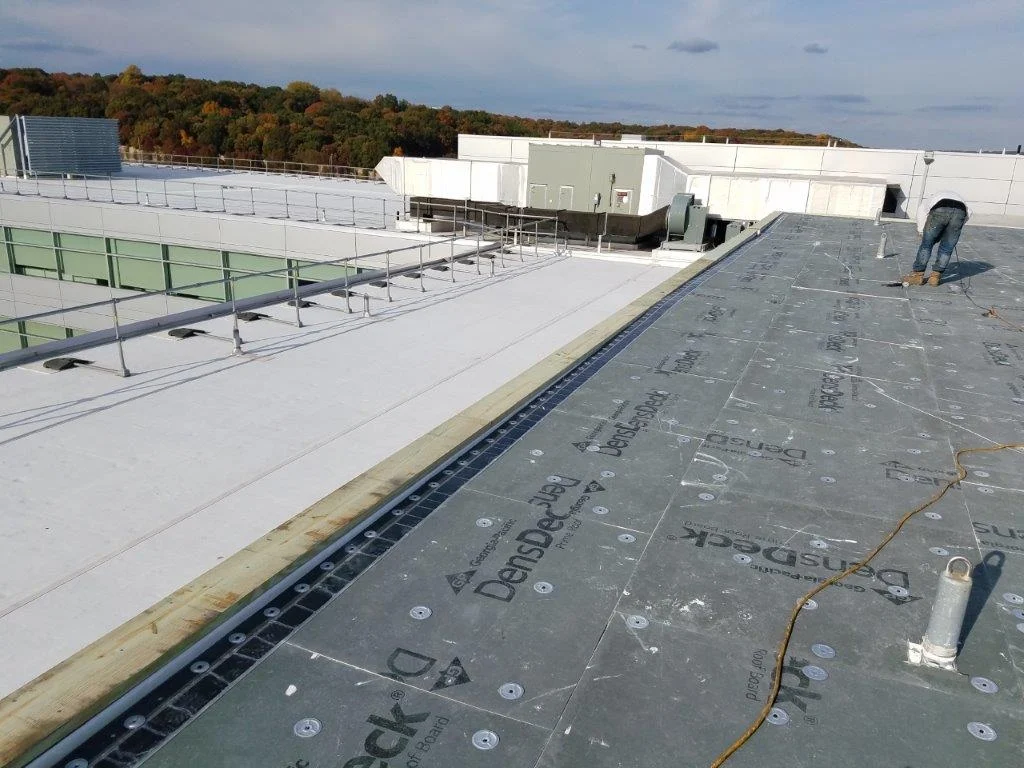
Reflective roofing performance measurement has become a priority for Long Island commercial property owners facing New York State energy compliance requirements. White TPO membranes, with solar reflectance values typically in the 0.72 to 0.80 range, already perform well, but 2026 sees property owners requesting third-party verification of reflectance values rather than simply accepting manufacturer data sheets. This trend aligns with broader sustainability reporting requirements that publicly traded companies and institutional property owners must meet. All-Star Roofing Inc. sources TPO products from manufacturers who provide third-party certified performance data and supports clients in meeting New York State energy code documentation requirements.
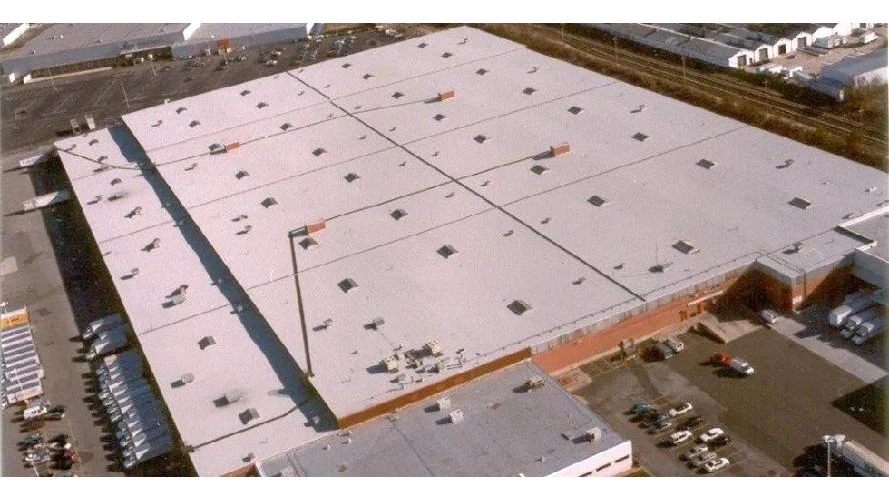
The industrial park clusters in Central Islip, the distribution and light manufacturing facilities along Sunrise Highway in Bay Shore, and the commercial retail strips throughout Amity Harbor's 11701 ZIP code all represent ideal candidates for TPO re-roofing. Large footprint single-story buildings — warehouses, manufacturing facilities, big-box retail — benefit most dramatically from TPO's combination of low installed cost per square foot, strong heat reflectivity, and minimal maintenance requirements once properly installed. All-Star Roofing Inc. has direct experience with the building stock in all of these zones and understands the structural and drainage peculiarities of South Shore commercial construction.
The EPDM-versus-TPO comparison remains one of the most common conversations in Long Island commercial roofing, and the honest answer is that both systems have legitimate roles depending on the application. EPDM's black surface absorbs solar energy, which can be advantageous for heating-dominant climates, and its chemical resistance makes it the preferred choice for facilities where petroleum-based chemicals may contact the roof surface. TPO's white surface reduces cooling loads — a significant advantage in Long Island's humid summers — and its heat-welded seams typically outperform EPDM's adhesive or tape-bonded seam systems in long-term waterproofing integrity. All-Star Roofing Inc. conducts a genuine system analysis for every project rather than defaulting to a single solution, ensuring property owners receive the roofing system that fits their building's specific demands.
All-Star Roofing Inc. serves commercial and industrial property owners throughout Amity Harbor and Suffolk County, including Bay Shore, West Islip, Central Islip, Brentwood, Babylon Village, Lindenhurst, Brightwaters, North Bay Shore, Amityville, and Islip. Whether you are in the Sunrise Highway corridor or the industrial zones near MacArthur Airport, our roofing contractor team delivers TPO expertise directly to your property.
For new installations and re-roofing projects on Long Island, a 60-mil TPO membrane is the baseline specification most roofing contractors now recommend, with 80-mil becoming standard for high-traffic rooftops and industrial facilities in Suffolk County. The additional thickness provides significantly greater puncture resistance against mechanical service traffic, better performance under thermal cycling from coastal climate extremes, and stronger seam pull-out resistance. All-Star Roofing Inc. specifies membrane thickness based on your building's specific use and foot traffic patterns.
A properly installed TPO system in Long Island's coastal climate typically delivers 25 to 30 years of service life when paired with a quality insulation assembly and regular annual maintenance. Salt air, UV exposure, and freeze-thaw cycling are the primary aging factors. All-Star Roofing Inc. in Amity Harbor has installed TPO systems across Suffolk County that have performed for over 20 years without major remediation, validating their specification and installation standards in this specific climate.
Yes. New York State and Suffolk County both require roofing contractors to carry appropriate licensing for commercial roofing work in Bay Shore and throughout Long Island. Additionally, most TPO manufacturer full-system warranties require the installing contractor to hold current factory certification for the specific product line. Always request license documentation and manufacturer certification before signing any commercial roofing contract in Suffolk County.
White TPO membranes reflect 70 to 80 percent of solar radiation that would otherwise convert to heat load inside the building. For commercial and industrial properties in Bay Shore and across Suffolk County, this translates to measurable reductions in cooling costs during Long Island's humid summers. New York State energy code also credits cool roofing installations, meaning a TPO re-roofing project may help a property owner satisfy energy compliance requirements during a renovation permit application.
Late spring through early fall — roughly May through October — represents the optimal installation window for TPO roofing on Long Island. Adhesives and sealants used in TPO installation perform best above 40°F, and hot-air welding quality is more consistent when temperature and humidity are stable. All-Star Roofing Inc. can complete emergency TPO installations year-round when building integrity requires immediate response, but schedules permitting, warmer months produce the most consistently excellent results.